Tracking Handle Growth Driven by Broadcast Expansion
In August 2025, the UFC signed a seven-year media rights deal with Paramount worth $7.7 billion. The number is staggering on its own — it is one of the largest sports media contracts in history and nearly five times the value of the UFC’s previous ESPN arrangement. But for MMA bettors, the deal’s significance goes beyond the dollar figure. Media deals determine who watches, how many watch, and how deeply the casual audience engages with the sport. And every one of those variables feeds directly into the betting market that we operate in.
More viewers mean more bettors. More bettors mean larger handle. Larger handle changes the dynamics of the odds — sometimes making them sharper, sometimes making them softer, depending on the composition of the new money. Understanding how the Paramount deal reshapes the MMA betting ecosystem is not a peripheral concern for serious bettors. It is central to anticipating where value will appear and where it will disappear over the next half decade.
The Paramount Deal: Terms, Money, and What Changed
The $7.7 billion over seven years works out to roughly $1.1 billion per year in guaranteed media rights revenue — a figure that alone exceeds the UFC’s entire annual revenue just a few years ago. The deal moves UFC content from ESPN and ESPN+ to Paramount+ and CBS, giving the sport access to a broader linear television audience alongside the streaming platform.
Sponsorship revenue has surged alongside the media deal. Sponsorship income grew by $62.9 million to $314.3 million in 2025 — the single largest contributor to overall revenue growth that year. The DraftKings partnership ($350 million over five years) and the Crypto.com agreement ($175 million over ten years, the largest sponsorship in UFC history) illustrate how deeply the sportsbook and wagering ecosystem is embedded in the UFC’s commercial model. TKO Group projects total revenue of $5.675-5.775 billion for 2026, roughly 20% higher than the previous year.
For bettors, the financial structure of the deal matters because it locks in a level of exposure that guarantees market growth. The UFC is contractually incentivised to produce more content, promote more aggressively, and push further into mainstream entertainment — all of which expands the betting audience. UFC president Dana White has been explicit about the connection: the UFC supports a legal sports betting market because it drives fan engagement, broadcast value, and sponsorship revenue. The Paramount deal is the commercial infrastructure that makes this symbiosis possible at scale.
More Eyeballs, More Bettors: How Media Exposure Grows Handle
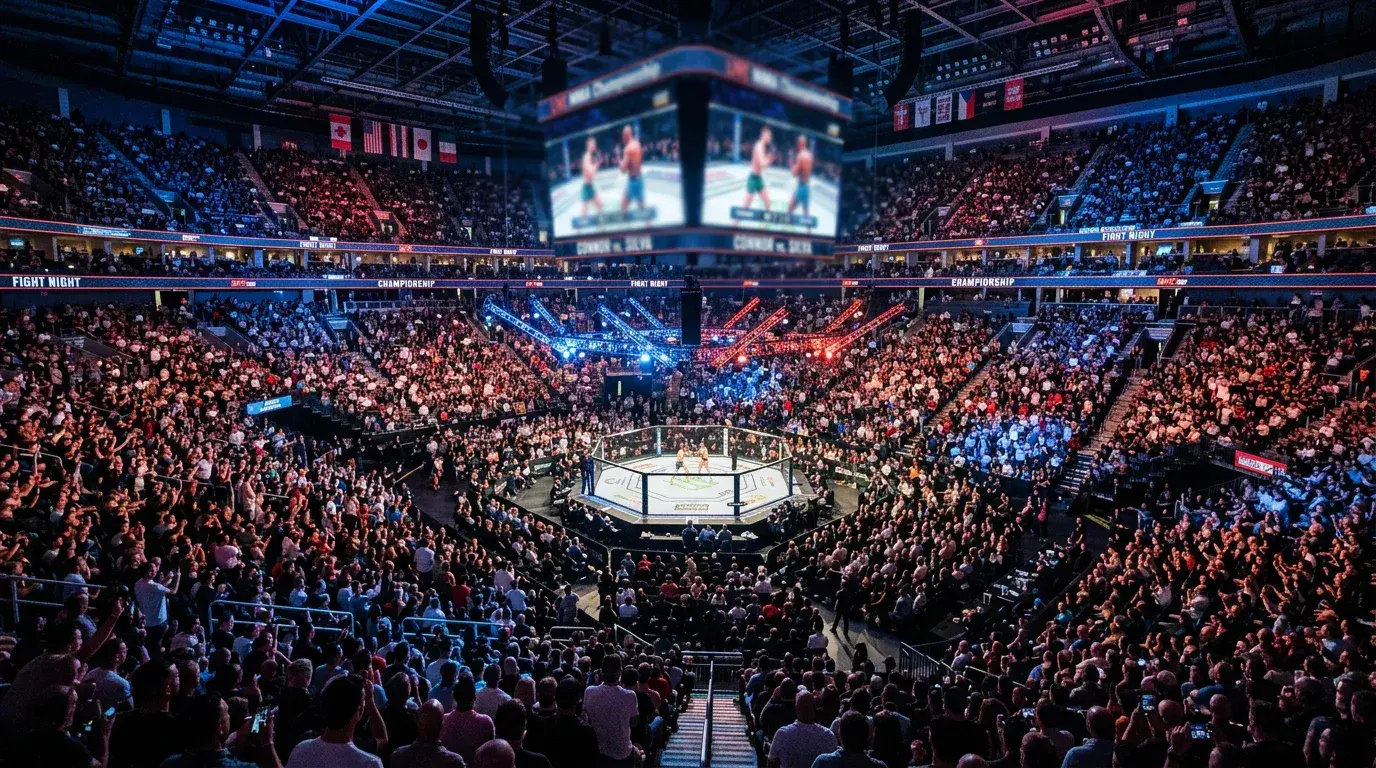
The relationship between media exposure and betting volume is not linear — it compounds. When a casual fan watches a UFC event on Paramount+ and sees betting integrations, odds overlays, and prediction market scoreboards embedded in the broadcast, that viewer is one step closer to becoming a bettor. They may not bet on that first event, or the second, but by the tenth event they have absorbed enough context to feel comfortable placing a wager. The conversion pipeline from viewer to bettor is long but reliable, and the Paramount deal floods the top of that pipeline with new viewers.
MMA betting handle reached $10.3 billion in 2024, and industry projections suggest the combined MMA and boxing betting market will exceed $6 billion in gross gaming revenue by 2033. The Paramount deal is one of the primary growth drivers behind those projections because it guarantees the UFC a level of broadcast presence that competitors — Bellator, PFL, ONE Championship — cannot match. Handle grows with viewership, and viewership is now contractually secured at a scale that makes MMA betting one of the fastest-expanding verticals in the global sports wagering market.
The composition of new bettors matters as much as the volume. Media-driven growth brings predominantly casual bettors — people who bet on fighters they watched on television rather than fighters they analysed. Casual money is less efficient than sharp money. It flows toward favourites, toward name recognition, toward the last spectacular knockout. This creates systematic pricing errors on the fights that casual bettors ignore: prelim bouts, lesser-known fighters, and market segments where the analytical bettor’s information advantage is largest.
The Paramount deal also increases the number of events that receive full broadcast production. Previously, many Fight Night cards received limited coverage and minimal promotion. Under the new deal, every event on the calendar is content that justifies the $1.1 billion annual rights fee, which means every card gets promoted, every card draws viewers, and every card generates betting volume. For the serious bettor, this means more opportunities per year to bet on under-covered fights where the pricing is softest.
What the Deal Means for UK UFC Viewers and Bettors
The UK broadcast landscape for UFC is shaped by the Paramount deal’s global distribution terms. A February 2026 survey found that 68% of UK gamblers expect to increase their betting activity over the year, and while much of that anticipated increase is driven by the 2026 FIFA World Cup, the expanded UFC broadcast presence contributes to a rising tide of sports engagement that lifts all wagering verticals.
For UK bettors specifically, the Paramount deal’s most immediate effect is on event timing and accessibility. The UFC’s programming strategy under the new deal prioritises prime-time slots in North America, which means UK viewers face late-night schedules for most numbered events. This is not new, but the increased volume of events under the Paramount umbrella means more late-night cards and more Saturday mornings spent reviewing results you could not watch live. The betting implication is that UK bettors who cannot watch events live should place their bets in advance rather than relying on live betting, and should build their analytical process around pre-fight preparation rather than in-event reaction.
The broader market effect is positive for UK MMA bettors despite the timing inconvenience. More global handle means more liquidity in the odds markets, which means tighter spreads and better prices. More casual viewers converting to bettors means more inefficiency in the markets where casual money dominates. And the guaranteed seven-year broadcast commitment means the growth is sustained, not speculative — you can build a betting strategy around a market that is contractually guaranteed to expand for the remainder of the decade.