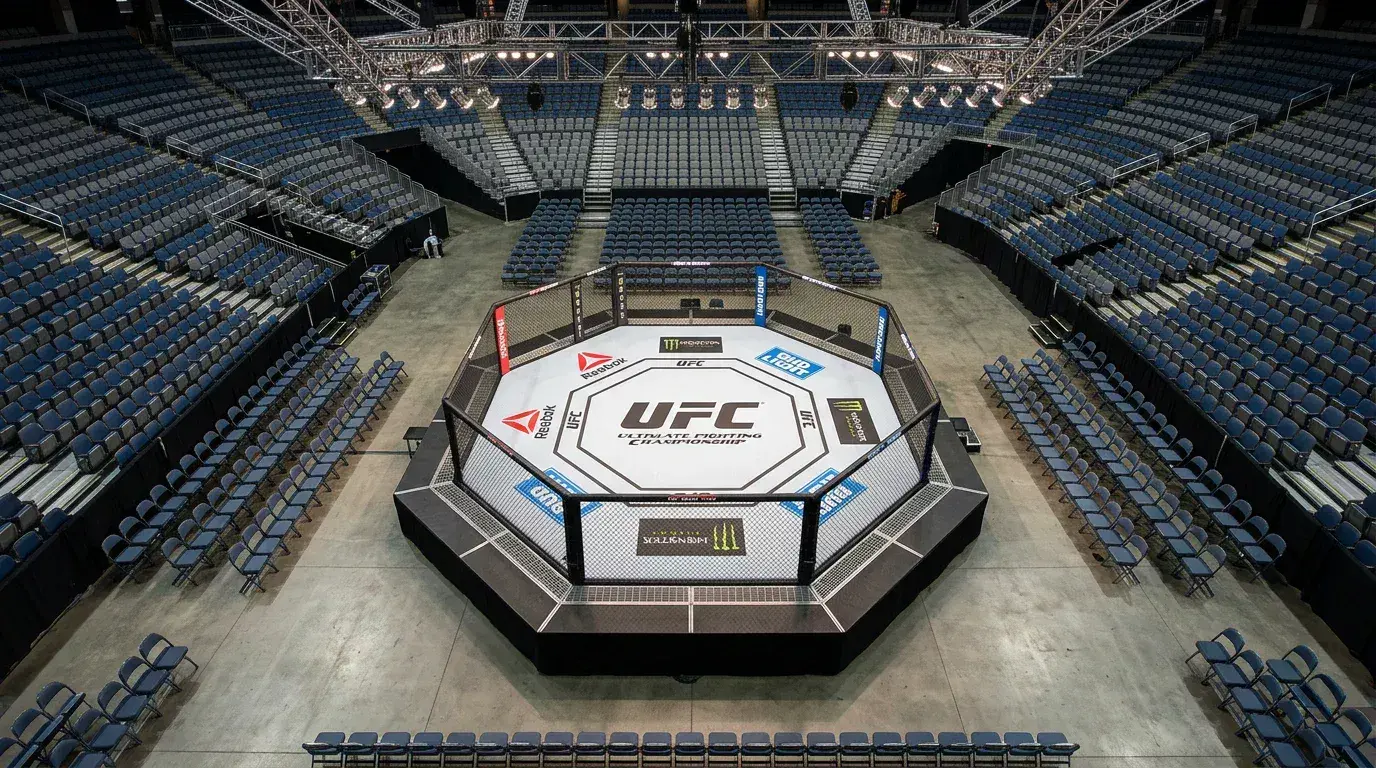

Tracking Structural Win Rates by Corner Assignment
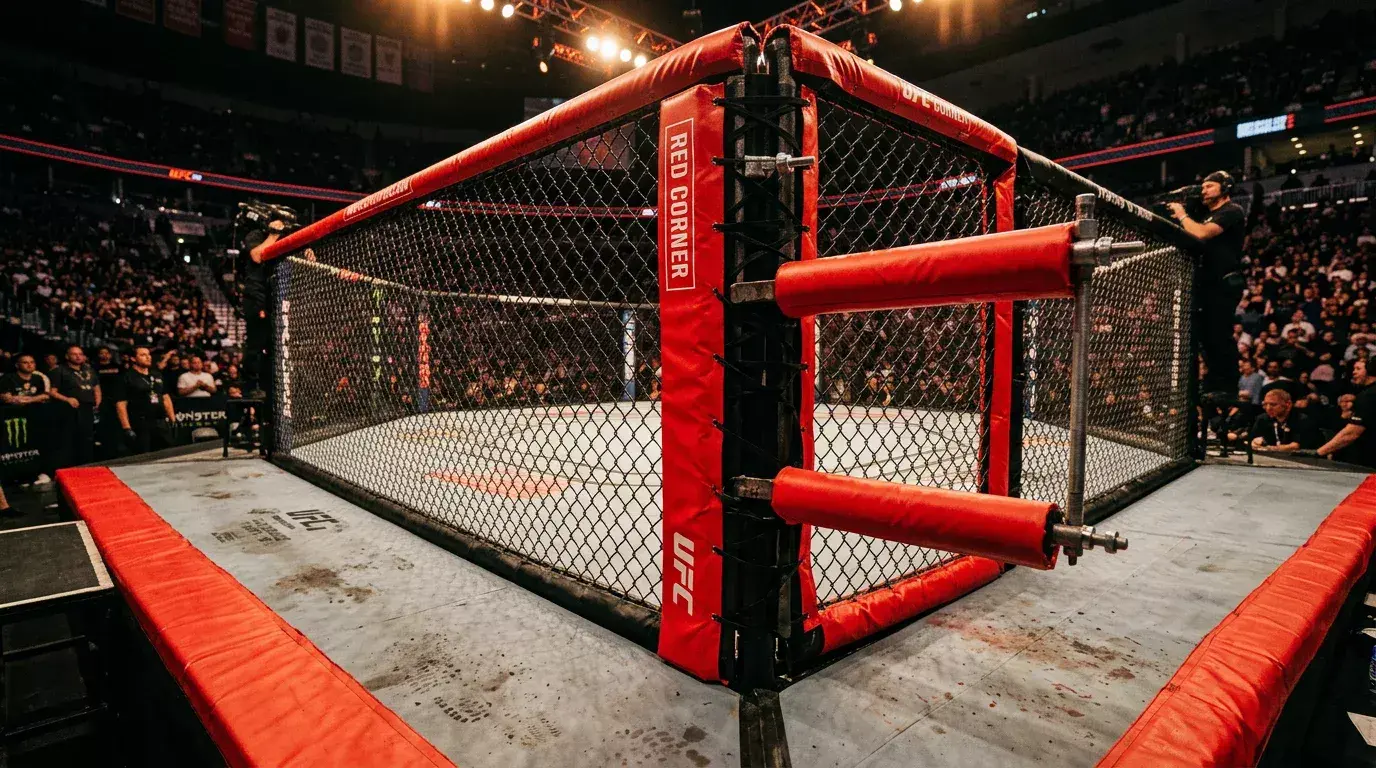
Early in my career I dismissed corner assignment as irrelevant — just a colour, just a procedural detail. Then I ran the numbers across three years of UFC events and found something that made me reconsider every assumption I held about “minor” variables. The red corner wins between 55% and 65% of UFC bouts. Consistently. Across weight classes, across genders, across event types. That is not noise. That is a structural feature of the sport, and it has implications for how you price fights.
A Carnegie Mellon University capstone research project analysed 6,478 UFC fights and confirmed the pattern: red-corner fighters win at a rate significantly above 50%, with the advantage persisting across every meaningful segmentation of the data. The effect is not new, either — it has been present for years, visible in the data to anyone who bothered to look.
The question is whether this advantage is real in the causal sense or merely a statistical reflection of something else. The answer to that question determines whether red-corner data is useful for betting, and how to use it. I have spent considerable time untangling the two possibilities, and the truth, as usual, sits somewhere in the middle.
The CMU Study: 6,478 Fights and What They Revealed
The dataset is large enough to take seriously. Across nearly 6,500 bouts, red-corner fighters won at a clip that is well above chance, and the advantage held when the data was sliced by weight class, gender, and fight position on the card. That last point matters: the red-corner advantage is not simply a main-event phenomenon driven by champions defending their titles. It appears on prelims, on Fight Night cards, and across numbered events alike.
The magnitude varies by division but never disappears entirely. Heavier weight classes, where roughly 44% of fights end by decision and nearly half of heavyweight bouts end by knockout, show a red-corner advantage that tracks closely with the overall average. Lighter divisions show it too, though the margin narrows slightly in the most technically refined weight classes where skill differentials are smaller.
What the CMU study could not do — what no observational study can do — is isolate causation. The red corner in UFC is traditionally assigned to the higher-ranked fighter, the champion, or the fighter deemed the bigger draw. This means the red corner is not random. It is correlated with quality. The fighter who walks out second, in the red trunks, is usually the fighter whom the UFC considers the better or more marketable competitor, which means they are often the better fighter on merit.
That confounding variable is the entire crux of the debate. Is the red corner winning because of something about being in the red corner — a psychological lift, a procedural advantage, the crowd energy of walking out last — or is it winning because the UFC assigns its better fighters to red? If it is the latter, the red-corner statistic is just a proxy for fighter quality and tells you nothing you would not already know from the odds.
Correlation or Causation: Why the Red Corner Wins More
I lean toward a blended explanation, and here is why.
The selection effect is real and accounts for most of the advantage. The higher-ranked fighter is placed in red, and higher-ranked fighters win more often. If you control for ranking differential, the red-corner advantage shrinks considerably. This is the boring but dominant explanation, and any bettor who ignores it is reading the data wrong.
But a residual effect persists even after controlling for ranking and odds, which suggests something else is going on. Psychological research on colour advantage in combat sports — dating back to a 2005 study on Olympic boxing and wrestling — found that athletes wearing red won more often than those in blue, even in matched competitors. The hypotheses range from the plausible (red is associated with dominance and aggression, affecting both the wearer’s mindset and the judges’ perception) to the speculative (opponents perceive red-clad fighters as more dangerous and fight more cautiously).
In UFC specifically, the red-corner fighter walks to the cage second, which means they hear the crowd response to their name last. That temporal advantage creates a slight psychological boost — the roar is fresh, the adrenaline is peaking, and they enter the cage with the final emotional momentum. It is small, likely worth no more than a percentage point or two in win probability, but across thousands of fights it shows up in the data.
The judging bias hypothesis is harder to test but worth noting. If judges unconsciously favour the red corner in close rounds, the effect would show up precisely in the type of fights where human perception matters most — tight, competitive bouts that go to decision. Some analysts have found that the red-corner advantage is slightly more pronounced in split decisions than in unanimous ones, which is consistent with a judging-bias explanation, though the sample sizes for split decisions are too small for strong conclusions.
How to Factor Corner Assignment into MMA Bets
I use corner assignment as a tiebreaker, not a primary signal. If my analysis of a fight has two fighters essentially even — similar styles, comparable records, closely matched odds — I give a slight nudge to the red-corner fighter. That nudge is worth perhaps 1-2 percentage points in my estimated probability, no more.
Where I find it more useful is in questioning blue-corner favourites. If a fighter is assigned the blue corner despite being the betting favourite, something unusual is happening. Perhaps the opponent has a higher ranking but longer odds due to recent losses, or perhaps the event scheduling placed the favourite on the wrong side of the assignment. In either case, the blue-corner favourite is swimming against a statistical current, and that is worth noting even if the current is gentle.
I never bet on a fight solely because of corner assignment. The effect is real but small, and the bookmaker’s margin easily swallows a 1-2% edge. Corner data becomes useful only when it is layered on top of a comprehensive fighter analysis that already identifies a lean. Think of it as the last gram on a scale that is already tipped in one direction, not as a counterweight that can tip the scale on its own.
One practical application: when tracking your bets over time, record the corner assignment alongside your other variables. After a year of data, you can check whether your blue-corner picks are underperforming your red-corner picks by more than the base rate would predict. If they are, it may indicate that you are not adequately accounting for the structural advantage in your analysis, and a small calibration adjustment could improve your results.
The Colour You Should Not Ignore
The red corner’s 55-65% win rate is one of the most robust statistical patterns in UFC data. Most of it is driven by selection — the better fighter gets the red corner. But the residual effect, the small psychological and procedural edge that persists after controlling for quality, is real enough to matter at the margins. In a sport where long-term betting edges are measured in single-digit percentages, a factor worth even one or two points of probability is not something you throw away. Note it, weight it appropriately, and let it inform your close calls. The data is there. The question is whether you use it.