
Analyzing Finish Rates Across Different Octagon Dimensions
The UFC Apex in Las Vegas changed how I bet on MMA. When the promotion moved events to its purpose-built facility with a smaller cage during the pandemic years, I noticed something that the odds rarely reflected: fights were ending faster, more often, and more violently. The numbers confirmed what my eyes were telling me — the smaller octagon produces a 12% higher finish rate compared to the standard-size cage. That is not a marginal difference. That is a structural edge hiding in plain sight.
Most bettors never think about the cage. They analyse fighters, styles, records, and odds. They check weight-class tendencies and recent form. But they treat the cage itself as a constant — an unchanging backdrop to the action. It is not. The octagon is a variable, and the UFC uses two different sizes depending on the venue. If you are not adjusting your bets based on which cage the fights take place in, you are ignoring one of the most statistically significant factors in MMA outcomes.
Standard vs Small Octagon: Dimensions and Where Each Is Used
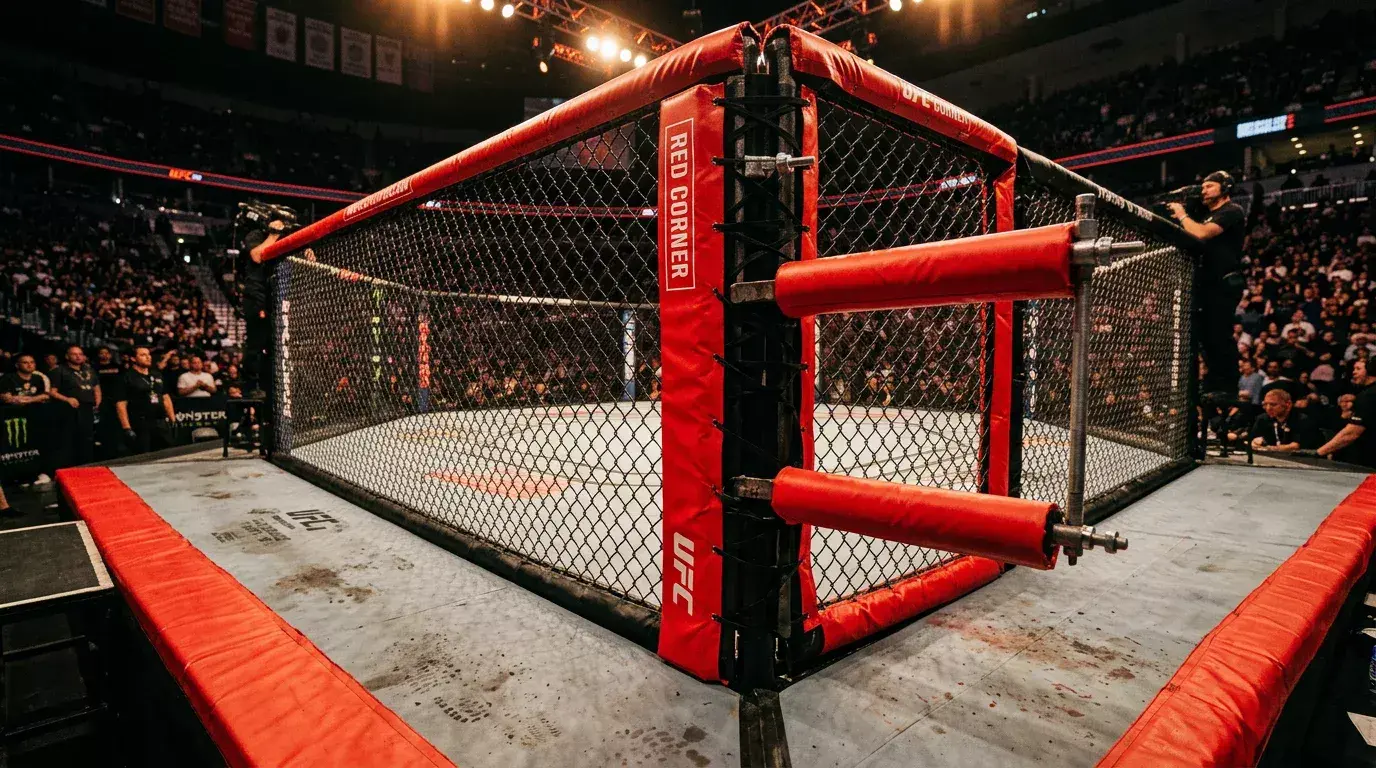
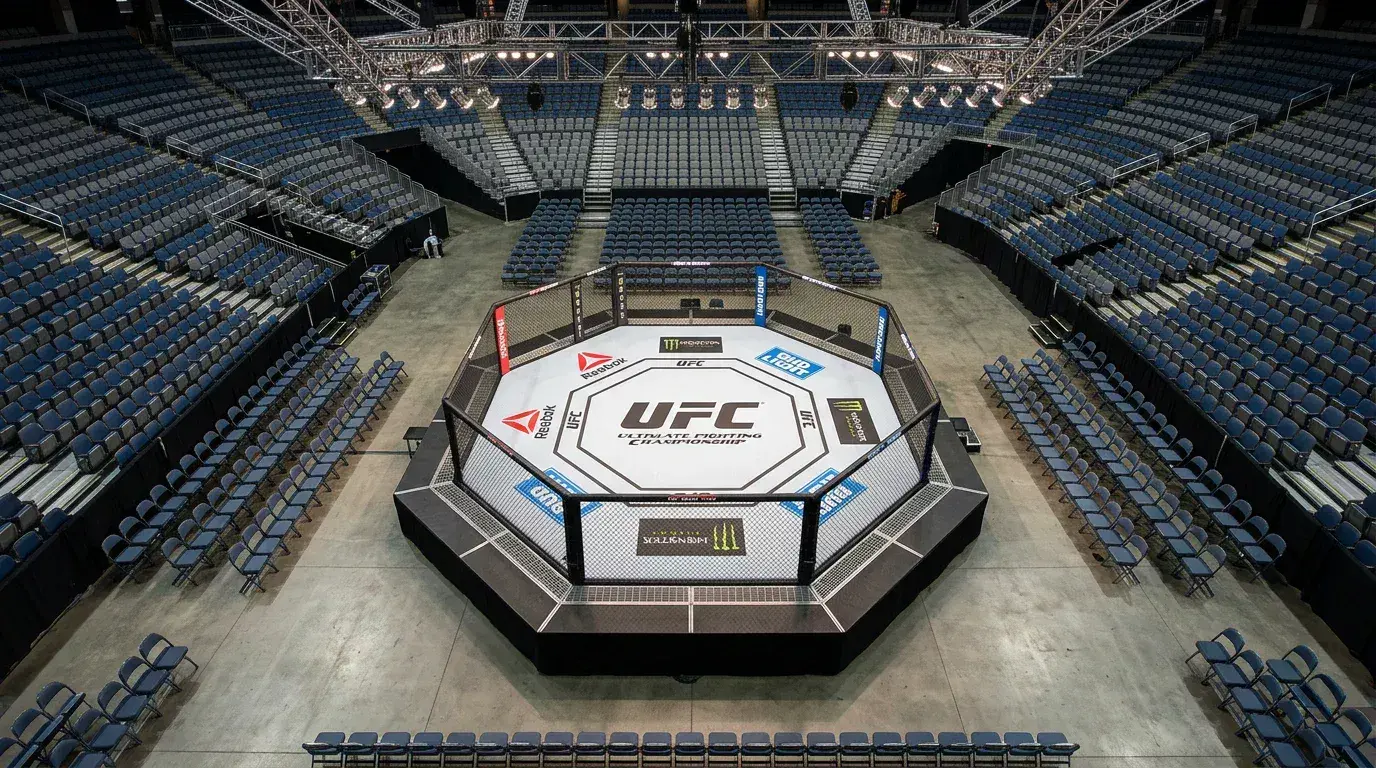
The standard UFC octagon measures 30 feet across, giving fighters roughly 750 square feet of floor space to work with. The smaller version is 25 feet across, with around 518 square feet. That is a 31% reduction in total area, which compresses the available space dramatically.
The standard cage appears at major arena events — numbered UFC pay-per-views in large venues, international cards at O2-sized arenas, and major Fight Night events in purpose-built settings. The smaller cage has historically been used at the UFC Apex for Fight Night cards and Dana White’s Contender Series, though its deployment has expanded as the promotion has rotated venues.
The practical difference for fighters is profound. In the standard cage, a rangey counter-striker can maintain distance almost indefinitely. They can circle away from pressure, use lateral movement to create angles, and reset to the centre after exchanges. The extra five feet of diameter translates to significantly more room to retreat and reposition.
In the smaller cage, that escape route shrinks. Two or three steps backward and you are against the fence. Pressure fighters reach their opponents faster. Clinch situations happen more frequently because there is less room to disengage. Grapplers find it easier to cut off the cage and secure takedowns against a retreating opponent. The entire tactical landscape shifts toward engagement and away from evasion.
The 12% Finish Rate Difference: What the Data Shows
I started tracking cage-size outcomes systematically in 2021, and by the end of 2023 I had enough data to make confident adjustments. The smaller octagon showed a finish rate roughly 12 percentage points higher than the same quality of matchups in the standard cage. That figure has held remarkably steady as the sample has grown.
The finish rate increase is not evenly distributed across methods. Knockouts and TKOs account for the largest share of the increase, which makes sense: more engagements per round, more sustained pressure, and less room to recover from being hurt all conspire to produce more stoppages on the feet. Submission rates rise as well, but by a smaller margin, driven primarily by the increase in clinch and cage-wrestling situations that create scrambles on the ground.
Decision rates drop correspondingly. In the standard cage, about 44% of UFC fights go to the scorecards. In the smaller cage, that number falls meaningfully. For over/under bettors, this is critical: the same matchup that you would bet “over 2.5” in a standard cage might be a borderline “under” play in the smaller octagon, purely because the spatial dynamics push more fights toward early endings.
I treat cage size as a modifier applied after my initial assessment. If my base analysis says a fight has a 45% chance of going to decision, I knock several points off that estimate when the fight is in the small cage. That adjustment has improved my round-total accuracy more than almost any other single variable I have added to my model over the years.
Which Fighting Styles Benefit From a Smaller Cage
Not all fighters benefit equally from reduced space, and understanding who gains and who suffers is where the real betting edge lives.
Pressure fighters are the clearest winners. Fighters whose game plan revolves around walking forward, cutting off the cage, and forcing exchanges thrive when the cage itself does half the cutting-off for them. A pressure striker who might spend three minutes in a standard cage chasing a mobile opponent before cornering them can achieve the same positional dominance in sixty seconds in the small cage. That time saved means more damage delivered, more fatigue inflicted, and a higher finish probability.
Wrestlers benefit significantly too. The most energy-expensive part of a wrestling-based approach is closing distance against a moving target. In the smaller cage, the target cannot move as far, which means the wrestler spends less energy on the approach and more on the actual takedown and control. Fighters who rely on cage wrestling — pinning opponents against the fence and working from the clinch — see an amplified version of their best skills.
The losers are distance fighters. Counter-strikers, long-range kickers, point-fighters, and anyone whose strategy depends on controlling space and avoiding sustained exchanges will find the smaller cage hostile. Their primary defensive tool — footwork and ring generalship — is blunted by the reduced dimensions. Nearly 50% of heavyweight fights end by knockout in general, and that rate climbs even higher in the small cage, where big men have nowhere to hide from power shots.
I make a specific note in my fight analysis whenever a rangey, movement-dependent fighter is booked into a small-cage event. If the fighter’s style relies on maintaining distance, the venue itself becomes a factor working against them — and against their odds, which are often set without full cage-size adjustment from the sportsbook.
Adjusting Your Bets When the Cage Shrinks
Cage size is the rare betting factor that is both highly predictive and systematically underpriced. Sportsbooks know about the difference, but their models typically do not adjust aggressively enough for it, partly because the betting public does not demand it. When I see a card booked at a small-cage venue with multiple pressure-versus-distance matchups, I know the over/under and method-of-victory markets are likely to offer value that would not exist at a standard-cage event. The cage is not just the stage. It is a participant in every fight — and it rewards the bettors who pay attention to its dimensions.