
Factoring Arm Length Into Striking and Grappling Scenarios
I spent the better part of 2018 convinced that reach advantage was the most underpriced variable in UFC betting. I built a model, backtested it against three years of data, and started betting every fight where one fighter had a significant reach edge. Six months later I had learned an expensive lesson: reach alone predicts almost nothing. Reach in the right context predicts quite a lot.
The numbers on the tale of the tape — arm reach measured fingertip to fingertip, leg reach measured from hip to heel — are among the few objective physical measurements available for every UFC fighter. They are public, precise, and unchanging between fights. Unlike camp intelligence or weight-cut data, reach requires no interpretation. A fighter either has five inches of reach advantage or they do not. The question is whether those inches translate into a meaningful edge in the specific matchup at hand, and the answer depends entirely on style.
What makes reach interesting for bettors is not the raw correlation with winning — which is modest — but the interaction effect between reach and fighting style, which is substantial and consistently mispriced. The market treats reach as a flat advantage. The data says it is conditional, and that condition is where the value lives.
Reach Differentials and Win Rates Across UFC Weight Classes
When you aggregate all UFC fights with a reach differential of three inches or more, the longer-armed fighter wins at a rate slightly above 52%. That number barely moves the needle — it is within the noise of random variation and far too thin to build a profitable strategy around. But the aggregate hides dramatic variation between weight classes.
At heavyweight, where nearly 50% of bouts end in a knockout, reach advantage amplifies the striking edge because the longer fighter can land punches from a range their opponent cannot reach. The win rate for the longer fighter at heavyweight with a five-plus-inch reach differential climbs meaningfully above the baseline, because the primary method of winning — stopping the opponent with strikes — is directly facilitated by the ability to hit without being hit. The finishing power at heavyweight means that the range advantage does not merely accumulate points over three rounds; it creates opportunities for fight-ending shots that the shorter fighter has to walk through danger to match.
At lighter weight classes — flyweight, bantamweight, featherweight — the reach advantage is less impactful because the fighters are faster, the knockout rate is lower, and the fights more frequently go to the scorecards. The overall UFC outcome distribution of roughly 44% decision, 35% KO/TKO, and 21% submission shifts at lighter weights toward more decisions, which dilutes the value of range advantage because judges score effective aggression and octagon control alongside striking accuracy. A shorter fighter who closes distance and lands in the pocket can outscore a longer fighter even if the longer fighter landed the cleaner shots at range.
The weight class where reach data is most useful for betting is welterweight and middleweight — the divisions where the knockout rate is moderate, the fighters are large enough to generate genuine stopping power, and the stylistic mix includes enough pure strikers to create matchups where reach becomes decisive. I pay the most attention to reach differentials in these two divisions and the least attention in the lightest weight classes.
When Reach Matters: Strikers vs Grapplers
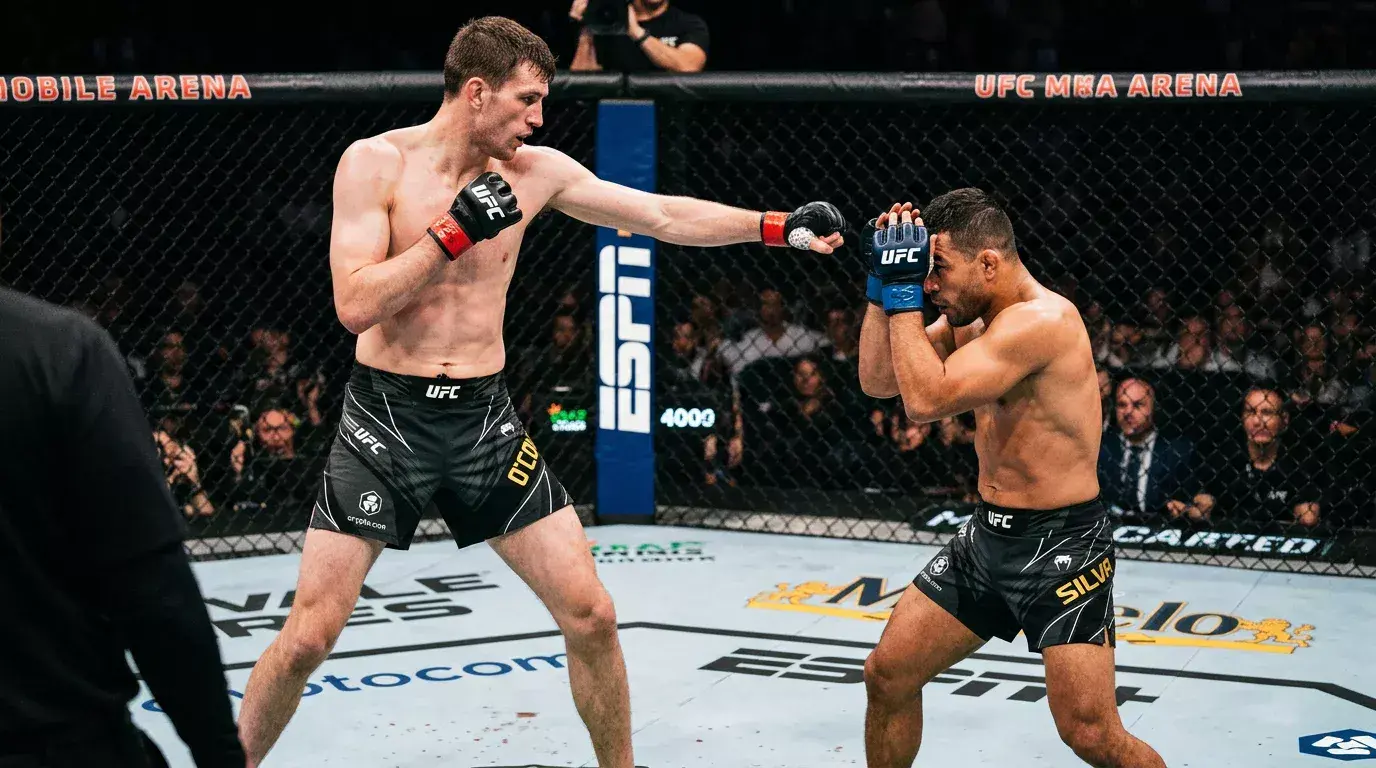
The style interaction is the core insight. A five-inch reach advantage in a fight between two point strikers who prefer to stay at range is a genuine weapon — the longer fighter controls the distance, lands the jab, and makes the shorter fighter pay every time they try to close the gap. In this matchup, reach functions exactly as the casual observer expects: more reach, better odds.
A five-inch reach advantage in a fight against an elite wrestler or pressure grappler is nearly worthless. The wrestler does not want to stand at range and trade jabs. They want to close the distance, clinch, and take the fight to the ground, where reach confers no advantage whatsoever. In fact, longer arms can be a disadvantage in grappling because they create longer lever arms that the opponent can manipulate for submissions and sweeps. Some of the most successful grapplers in UFC history have operated with significant reach disadvantages because their game plan bypassed the variable entirely.
No weight class illustrates this more clearly than heavyweight, where nearly half of all bouts end in knockouts, making reach a potent factor in striker-versus-striker matchups but an irrelevant one when the fight goes to the ground. I build reach into my betting model only after establishing the stylistic matchup. If both fighters prefer to stand, reach gets a significant weighting. If one fighter is a committed grappler, reach drops to near zero. This conditional approach to fighter analysis is far more profitable than applying reach as a blanket variable across all fights.
The market, by contrast, tends to treat reach as a flat input — longer reach equals slight favourite, regardless of style. This creates two-directional value: you can back the shorter fighter when the matchup neutralises reach (grappler versus striker), and you can back the longer fighter more aggressively when the matchup amplifies reach (both fighters are rangy strikers). Both adjustments are based on the same insight; only the direction changes.
When Reach Advantage Is Misleading for Bettors
There are three common scenarios where reach data actively misleads. The first is when the shorter fighter is a southpaw. Southpaw stance changes the geometry of striking exchanges — the lead hand is the right hand, which crosses the orthodox fighter’s jab line and partially neutralises the reach advantage of the taller, longer orthodox fighter. I have seen multiple bets go wrong because the reach differential looked decisive on paper but evaporated once the stance matchup was factored in.
The second misleading scenario is when the longer fighter has poor footwork. Reach only matters if the fighter uses it — staying at the end of their jab, circling to maintain distance, and punishing the shorter fighter’s entries. A long-armed fighter who plants their feet and brawls in the pocket is voluntarily surrendering their structural advantage, and the reach number on the tale of the tape becomes a fiction that the fight itself does not support.
The third is when the shorter fighter has an elite lead hook or uppercut game. At close range, the shorter fighter’s compact punches land faster and generate more power than the longer fighter’s arcing shots. A reach advantage is a disadvantage in the pocket because the longer fighter cannot generate the same angles at tight distance. If the shorter fighter can consistently close the gap — through head movement, feints, or pressure — the fight plays to their strengths despite the numbers suggesting otherwise.
The common thread is that reach is an anatomical measurement, not a tactical one. It describes a physical attribute, not how that attribute is used. Two fighters with identical reach can have completely different relationships to distance depending on their stance, footwork, and striking philosophy. The bettor who treats reach as a proxy for range control without verifying that the fighter actually controls range is making a lazy assumption that the market will sometimes punish.