

Common Analytical Flaws That Drain UFC Bankrolls
I have met MMA fans who can recite a fighter’s entire record from memory, who watch every card from the early prelims through the main event, and who understand the technical nuances of striking and grappling at a level most coaches would respect. They also lose money betting. Consistently. The knowledge gap is not about the sport — it is about the betting market, and the cognitive traps that turn good fight analysis into bad wagering decisions. One of the most common errors novice punters make is ignoring proper bankroll management and staking plans when chasing losses.
Every mistake on this list is one I have made personally, most of them more than once. The difference between my early years of MMA betting and my current approach is not that I became smarter about fights. It is that I became more honest about the ways my own thinking was sabotaging my results. These errors are not exotic or rare. They are ordinary, predictable, and ruthlessly expensive over time.
MMA Math: The Transitive Logic Trap
Fighter A beats Fighter B. Fighter B beats Fighter C. Therefore Fighter A beats Fighter C. This logic — known as MMA Math — feels intuitively correct and fails spectacularly in practice. I once lost a bet because I chained together three results to conclude that a fighter was a clear favourite, only to watch him get submitted in the first round by a man he should have dominated according to my transitive reasoning.
The flaw is structural. MMA outcomes are not transitive because styles determine matchups more than generic ability does. A wrestler who dominates a striker may lose to a jiu-jitsu specialist who loses to that same striker. The triangle of advantages is real and persistent, and no amount of chain logic can capture it. Every time you find yourself thinking “well, he beat the guy who beat that guy,” stop. Go back to the specific matchup in front of you and analyse it on its own terms: how do these two fighters’ styles interact, and what does the data say about that interaction?
The market exploits MMA Math constantly. When a fighter’s recent wins create a narrative of dominance, the public bets accordingly and the line shortens. The sportsbook is happy to let that narrative drive volume because it widens the gap between implied probability and true probability — exactly the gap where sharp bettors find their edge.
Recency Bias and Last-Fight Overreaction
A fighter scores a spectacular knockout on the biggest card of the year. Two months later, they are listed as a heavy favourite against a tough but less famous opponent. The odds imply a 70% win probability. Is that accurate? Usually not — but the public saw the knockout, felt the excitement, and bet the highlight reel.
Recency bias is the tendency to overweight a fighter’s most recent performance relative to their overall body of work. It is amplified in MMA because the gaps between fights are longer than in team sports — a fighter might compete only two or three times a year, which means each result carries disproportionate narrative weight. A single bad loss makes the market forget two years of dominance. A single spectacular win makes the market forget a career of inconsistency.
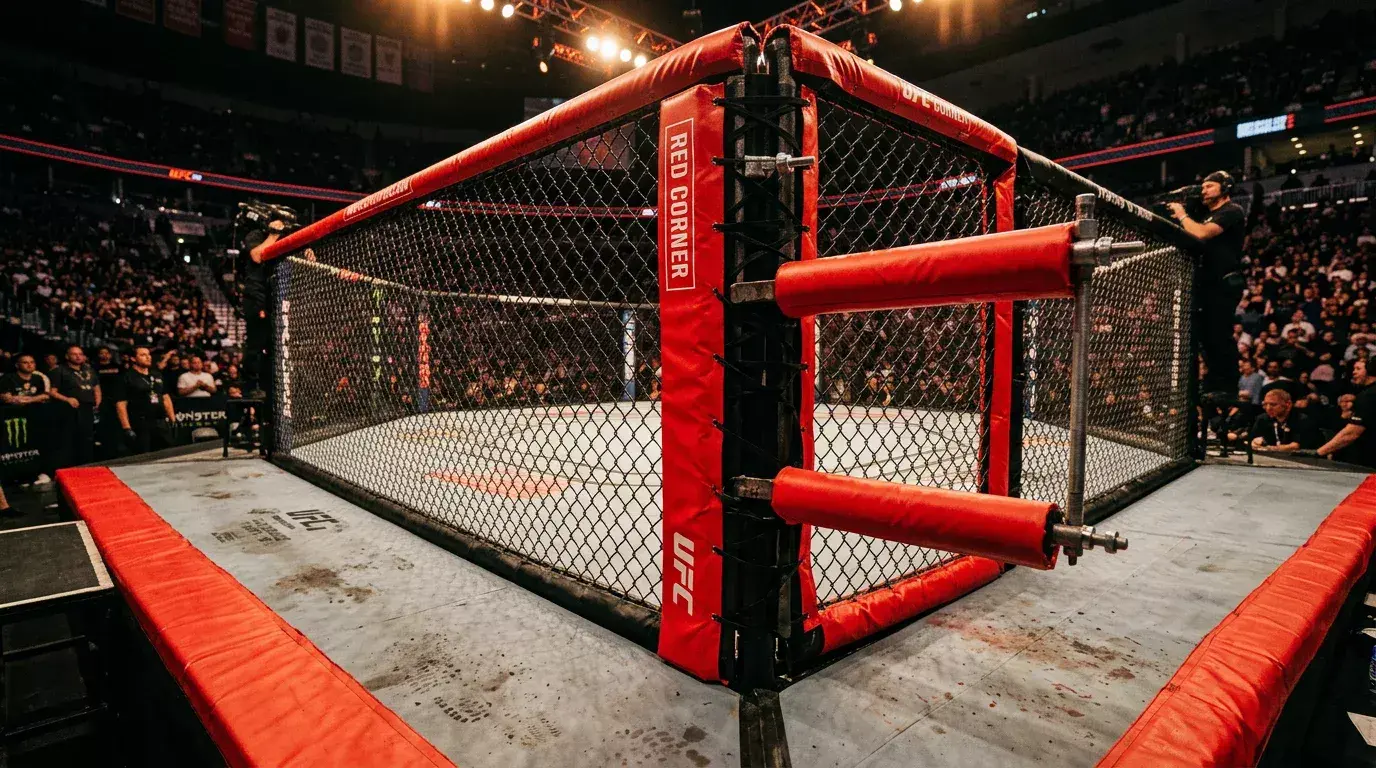
The red corner — typically the higher-ranked fighter — wins 55-65% of UFC bouts, but that win rate includes many fights where the red-corner fighter was correctly priced as a favourite. The recency bias error is not in recognising that favourites usually win — it is in letting a single recent result inflate or deflate your probability estimate beyond what the full statistical picture supports. When I catch myself anchoring to a fighter’s last bout, I force myself to review their last five, weighting each equally. The broader sample almost always produces a more accurate estimate than the single-fight snapshot.
Chasing Losses After a Bad UFC Card
A losing Saturday night is an emotional event. You analysed the card carefully, placed your bets with conviction, and watched three or four of them lose in succession. The bankroll drops. The frustration builds. And then the next card is only a week away, and the temptation to bet bigger — to win it back — is almost physical.
Chasing losses is the single most destructive behaviour in sports betting, and MMA’s weekly event schedule makes it particularly dangerous. There is always another card, always another opportunity to “make it back,” and the short gap between events does not give the emotional system time to reset. A bettor who doubles their stake size after a bad card and then suffers another bad card has now lost four times their normal session — a hole that takes weeks of disciplined betting to climb out of.
My rule is absolute: stake size never changes in response to recent results. It changes only when the bankroll itself has changed enough to warrant a recalculation — typically after every twenty-five bets or at the start of each month, whichever comes first. If the bankroll has shrunk, the unit size shrinks proportionally. If it has grown, the unit size grows. This mechanical approach removes emotion from the sizing decision entirely. A proper bankroll management system makes chasing losses structurally impossible rather than relying on willpower to prevent it.
I also keep a written rule in my tracking spreadsheet: “If last card was a losing card, review all bets for process errors before placing any bets on the next card.” The review usually takes fifteen minutes, and it either confirms that the process was sound and the losses were variance, or it identifies a specific analytical error I can correct. Either outcome is better than emotionally firing off recovery bets without reflection.
Ignoring Underdogs, Skipping Line Shopping, and Betting the Full Card
These three errors cluster together because they share a common root: laziness disguised as confidence. Ignoring underdogs means betting only on fighters you expect to win, which sounds reasonable until you realise that the expected value of a bet depends on the odds, not just the outcome. A fighter with a 35% chance of winning at odds that imply 25% is a better bet than a fighter with a 70% chance at odds that imply 72%. Roughly 44% of UFC bouts end by decision, meaning that close, competitive fights are far more common than the casual market assumes — and those competitive fights are where underdog value lives.
Skipping line shopping — using a single sportsbook for all your bets — is free money left on the table. The odds on UFC fights vary between operators by enough to swing a marginally negative-expected-value bet into positive territory. If you cannot be bothered to check three sportsbooks before placing a bet, you are voluntarily accepting a worse price for the same position. It takes thirty seconds.
Betting the full card is the volume error. Every bet without an edge is a bet where the bookmaker’s margin works against you. Three bets with genuine edge on a twelve-fight card will outperform twelve bets with average edge every time, because the edge on the three justified bets is concentrated and the margin on the nine unjustified bets is a pure cost. Selectivity is the cheapest edge in MMA betting, and most people refuse to use it because having action on every fight feels better than sitting on the sidelines for two hours.
The Mistakes You Make Twice
Every error on this list is recoverable — once. The bettors who go broke are not the ones who make a mistake; they are the ones who make the same mistake repeatedly because they never stop to identify it. Track your bets, review your losses, and be brutally honest about which losing bets were good bets that lost and which were bad bets you should never have placed. The distinction is the entire game. Refine your approach and eliminate costly errors by visiting our trusted UFC betting resource daily.