
Calculating Fatigue Risks Based on Geography and Flight Time
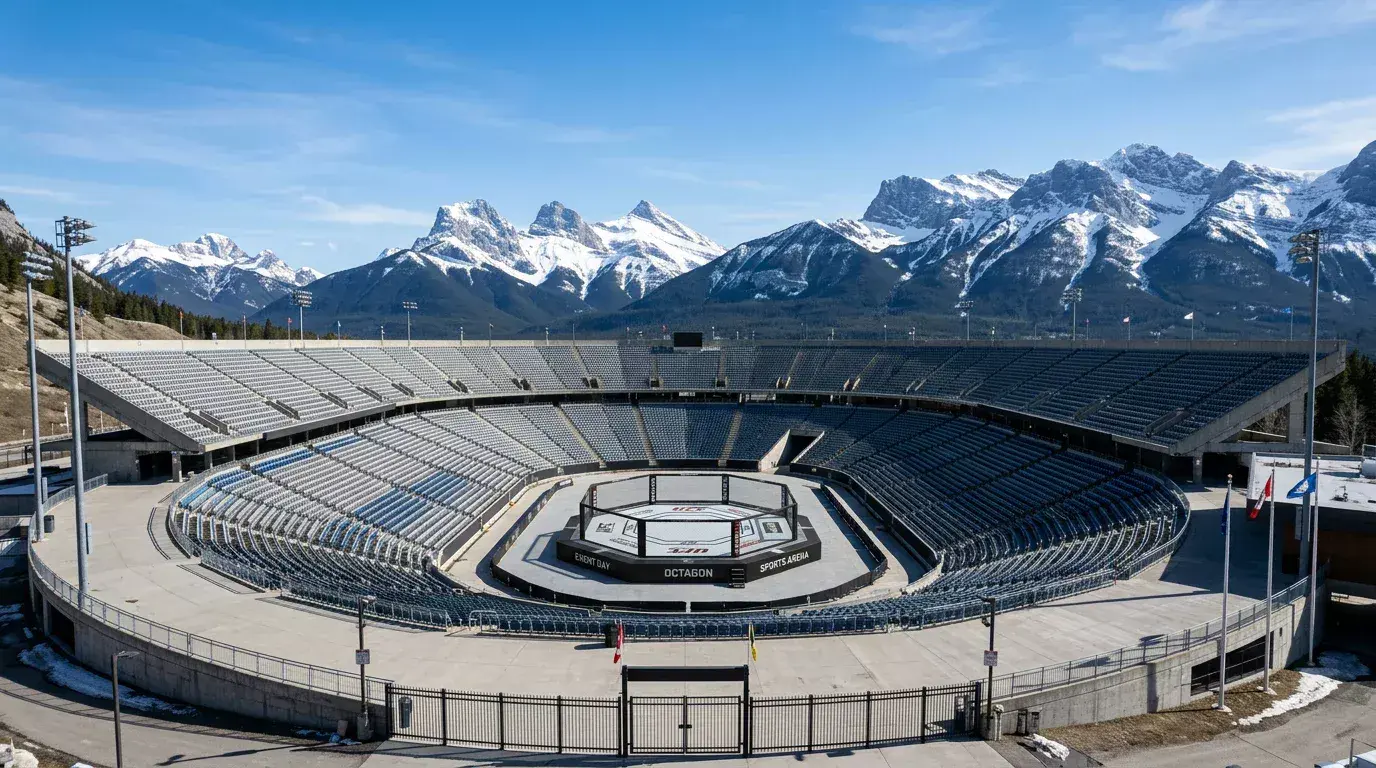
When Fabricio Werdum submitted Cain Velasquez for the heavyweight title in Mexico City in 2015, the altitude was 2,250 metres above sea level. Velasquez — famous for his relentless cardio and pressure fighting — visibly wilted in the second round, unable to sustain the pace that had made him one of the most dominant heavyweights in UFC history. The thin air did not throw the punches, but it drained the engine that powered them.
That fight is the most dramatic example of altitude affecting a UFC outcome, but it is far from the only one. Venue factors — altitude, travel distance, time-zone shifts, and local conditions — are among the least discussed variables in MMA betting, partly because the sample sizes are small and partly because the effects are hard to isolate. But small edges compound, and a bettor who systematically accounts for venue data is working with more information than one who ignores it.
I started incorporating venue analysis into my handicapping in 2019, and while I would never claim it is my primary edge, it has produced a handful of bets each year that I would not have found otherwise. In a sport where margins are thin, a handful of bets per year is worth the effort.
Altitude and Cardio: How Elevation Drains Fighters
The physiology is well-established in endurance sports: at elevations above 1,500 metres, the reduced partial pressure of oxygen decreases the amount available to working muscles. The body compensates by increasing breathing rate and heart rate, which accelerates fatigue. For a fighter relying on a high-output, pressure-heavy style — constant forward movement, high striking volume, aggressive wrestling — the cardio cost of maintaining that pace at altitude is measurably higher than at sea level.
UFC events in Mexico City sit at the extreme end of this spectrum. Events in cities like Denver (1,609 metres) or Salt Lake City (1,288 metres) present a milder but still meaningful challenge. The fighters most affected are those whose game plans depend on sustained output — the Cain Velasquez archetype. Fighters who rely on efficiency, counterstriking, or early-round finishing power are less affected because their energy expenditure is lower and more concentrated.
The betting implication is directional: at altitude, adjust your expectations toward the fighter with better cardio management, even if that fighter is nominally less talented. A pressure fighter who dominates at sea level may find their third-round output cut by twenty to thirty percent at altitude, and if their opponent can survive the early onslaught, the fight dynamics shift dramatically in the later rounds. This effect is particularly relevant for over/under rounds bets — altitude fights tend to go longer than the same matchup at sea level would, because the aggressor tires faster and the fight drifts toward decision.
The limitation is sample size. The UFC holds a small number of events at meaningful altitude each year, and the number of fights per event is fixed, so the total dataset is not large enough for robust statistical modelling. I treat altitude as a qualitative adjustment — nudging my probability estimates by a few percentage points when the effect is likely to be significant — rather than a quantitative factor with a precise coefficient.
Travel Distance, Time Zones, and Fighter Preparation
Altitude gets the headlines, but travel is the more common venue factor. A UFC event in Abu Dhabi requires European and American fighters to cross multiple time zones, adjust to desert heat, and adapt to a different daily rhythm. An event in Sydney asks the same of non-Australian fighters. Even within the United States, a fighter based in New York travelling to Las Vegas crosses three time zones and shifts from a humid coastal climate to dry desert air.
The evidence from team sports — particularly the NFL, NBA, and Premier League — suggests that travel and jet lag reduce performance measurably. The mechanism in MMA is similar: disrupted sleep patterns impair recovery, reaction time, and cognitive function. A fighter who arrives in the host city only two or three days before the event has not fully adjusted their circadian rhythm, and the effects may be subtle but present on fight night.
The fighters who mitigate travel best are those who arrive early — a week or more before the event — and those who have experience competing internationally. Some camps make early arrival a standard practice, while others cut costs by flying in as late as possible. This information is occasionally available through social media or camp reports, and it adds another layer to the venue analysis. A fighter who posted Instagram stories from their hotel in Abu Dhabi ten days before the event is in a different preparatory state than one who landed forty-eight hours ago.
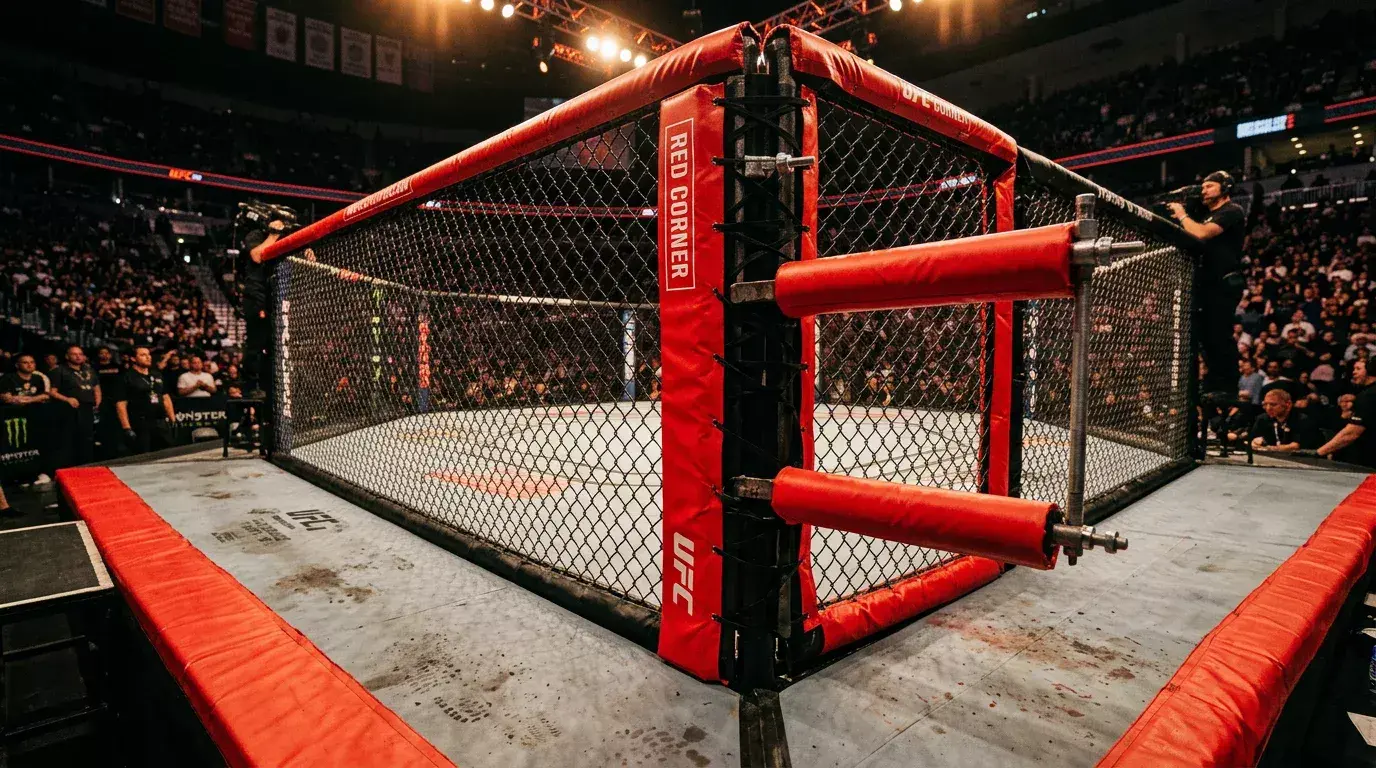
For UK-based UFC events — held periodically in London, and historically in Manchester, Glasgow, and Liverpool — the travel dynamic inverts. British and European fighters enjoy minimal travel disruption, while American and Brazilian fighters face transatlantic jet lag. The red corner in UFC fights wins 55-65% of bouts, but when you layer local advantage onto that structural edge for fighters competing close to home, the combined effect can be meaningful. I pay particular attention to undercard fighters on UK events — lesser-known British fighters who may be underpriced because the market is less familiar with them but who benefit from both home-crowd energy and zero travel fatigue.
Combining Altitude, Cage Size, and Location Data for Bets
Venue factors are strongest when they stack. A fight in a small octagon at altitude between a pressure fighter and a counterstriker creates a compound effect: the small cage pushes the finish rate up by roughly 12%, while altitude degrades the pressure fighter’s cardio. Those two forces push in the same direction — toward a counterstriker advantage — and the combined adjustment to my probability estimate can reach eight to ten percentage points in extreme cases.
I build a venue profile for every UFC event I bet on. The profile includes the city’s elevation, the cage size if known in advance, the travel distance for each fighter, the arrival date if discoverable, and any notable climate factors like heat or humidity. Most events produce a neutral venue profile — sea-level city, standard octagon, both fighters based in the same country. But two or three events per year produce venue profiles that genuinely move the needle, and those are the cards where venue analysis earns its place in my handicapping toolkit.
The key is proportionality. Venue factors are modifiers, not primary signals. A fighter who is better in every statistical dimension does not lose their advantage because the event is at altitude or across time zones. But in close fights — the coin-flip matchups where the moneyline sits near even money — venue factors can tip the analysis in one direction with more confidence than the fight data alone provides. That is where the edge lives: not in dramatic venue-driven upsets, but in marginal adjustments to probability estimates that improve your hit rate by a percentage point or two over the course of a year.