
Identifying Fighters Profiled for Three-Round Grinds
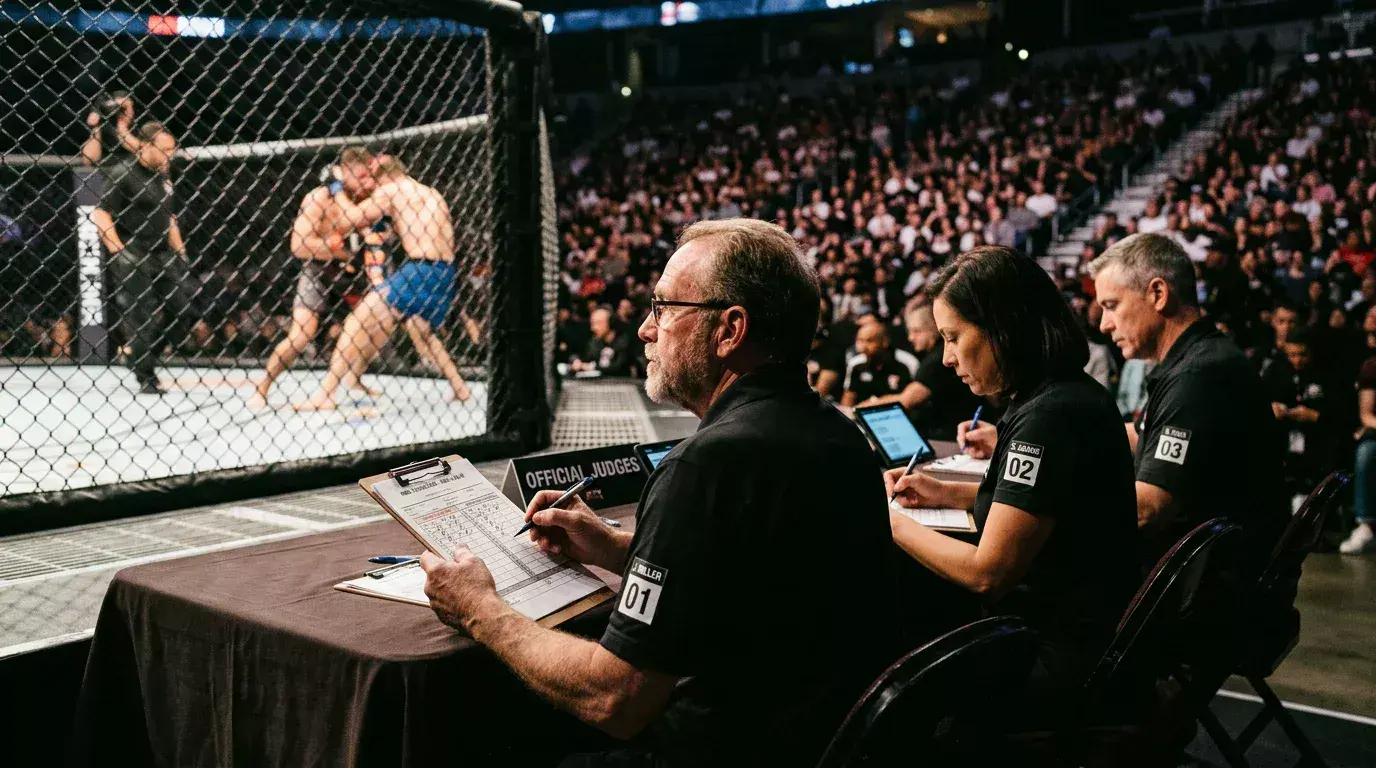
There is a moment, about ninety seconds into the third round, when two well-matched fighters settle into a rhythm that tells you the finish is not coming. The urgency fades. The output drops. Both fighters shift from trying to stop each other to trying to outscore each other, and the fight drifts toward the judges. Most bettors hate this outcome — it feels anticlimactic, boring, like the fight failed to deliver. I love it, because I had the decision bet in my pocket the whole time.
Roughly 44% of UFC bouts end by judges’ decision. That is not a fringe outcome. It is the single most common way a UFC fight ends — more common than knockout, more common than submission, more common than any other individual finish method. Yet the betting market consistently underestimates decision likelihood, partly because the public is drawn to the excitement of finishes and partly because sportsbooks shade their prices toward the outcomes that generate the most betting volume. Decisions are not glamorous. They are profitable.
Fighter and Matchup Profiles That Favour Decisions
Not every fight is a decision candidate. The skill is identifying which matchups are structurally likely to go the distance and then checking whether the market has priced that outcome correctly. Certain fighter profiles cluster heavily toward decisions, and recognising them is the first step.
Point strikers — fighters who prefer to work at range, maintain distance, and accumulate scoring strikes rather than hunting for a stoppage — are the most reliable decision producers in the UFC. These fighters typically have low finish rates on their records (below 40% of wins by stoppage), high striking accuracy, and strong takedown defence that keeps the fight standing. When two point strikers meet, the decision probability climbs above 60% regardless of what the tale of the tape might suggest about either fighter’s power.
Wrestlers with limited submission games are the second archetype. A fighter who consistently takes opponents down but rarely finishes on the ground will grind out rounds of top control and short strikes, accumulating points without creating the damage necessary for a stoppage. These fighters produce decisions at rates that frequently exceed their weight-class average, and the market often misprices this tendency because the public sees wrestling dominance and assumes it leads to finishes.
Weight class matters enormously. At heavyweight, where nearly 50% of bouts end by knockout, decision betting is risky because the finishing power is too high. At flyweight and bantamweight, where the knockout rate drops below 30%, decisions are far more frequent and the pricing is softer. Women’s strawweight pushes the decision rate above 50%, making it the single most fertile weight class for this strategy. The aggregate UFC split of 44% decision, 35% KO/TKO, and 21% submission is a starting point, not a destination — the specific weight class and specific matchup should always override the aggregate.
The matchup that screams decision loudest is two high-output, durable fighters in a lighter weight class. Neither has consistent knockout power, neither has a dangerous submission game, and both have the cardio to maintain output for fifteen or twenty-five minutes. When I see this profile, I check the goes-the-distance price immediately. If the implied probability is below 45%, I am usually interested. If it is below 40%, I am almost certainly betting.
Decision Bets vs Over/Under: Overlap and Differences
Decision bets and over/under rounds bets are cousins, not twins. Both profit when fights last longer, but they measure different things and carry different risk profiles.
An over/under rounds bet asks whether the fight will last longer or shorter than a specified threshold — typically 2.5 rounds for a three-round fight or 4.5 for a five-rounder. A decision bet asks specifically whether the fight will end on the scorecards. The over can win even if the fight ends by TKO in the third round (because it lasted beyond the 2.5 threshold), while the decision bet would lose because a TKO is not a decision. Conversely, a fight that ends by decision always cashes the over, but a fight that goes to 2:30 of round three and then ends by submission would cash the over but not the decision.
The practical implication is that decision bets are a subset of the over — they require the fight to go the distance and to have no finish at any point. This makes them harder to win but typically better priced, because the sportsbook builds in a larger margin to account for the additional condition. When my analysis strongly favours a long fight between two durable fighters with low finish rates, I often prefer the decision bet over the over because the price compensates for the additional risk, and my matchup analysis already suggests that a late stoppage is unlikely.
When I am less confident in the no-finish condition — when one fighter has occasional burst power even though they primarily point-fight — I take the over instead. The over gives me insurance against the possibility that a point-fighting contest produces a flash knockout, which happens more often than the base rates suggest because adrenaline and fatigue create opportunities that training camp sparring does not.
Finding Value in the Goes-the-Distance Market
The goes-the-distance market on most UK sportsbooks is a simple yes/no proposition: will the fight go the full scheduled distance? Yes pays out if the fight ends by decision. No pays out if it ends by any form of stoppage. The yes side is where I focus because the public systematically underestimates decision likelihood — casual bettors are drawn to finishes, and the money flows accordingly.
My process for finding value in this market starts with the fighter profiles described above. If both fighters fit the decision-producing archetype, I build my probability estimate from their combined historical decision rates, adjusted for the specific weight class. If Fighter A has gone to decision in 60% of their fights and Fighter B in 55%, my baseline estimate for a decision is in the high-50s percentage range, further adjusted upward or downward based on the stylistic interaction.
I then compare that estimate to the market price. If the goes-the-distance yes is priced at implied probability of 45% and my estimate is 58%, the gap is large enough to bet confidently. If the gap is only two or three percentage points, I pass — the edge is not sufficient to overcome the margin.
Timing matters in this market. Decision prices tend to be most generous early in the week because sharp bettors who specialise in prop markets have not yet engaged. By Friday, the sharps have corrected the most obvious mispricings, and the remaining value is thinner. I place my decision bets on Tuesday or Wednesday and do not revisit them unless significant new information — an injury, a weight issue — changes the matchup dynamics.
The emotional discipline required for decision betting is underappreciated. You are rooting for the least exciting outcome. You are watching a fight hoping that nothing spectacular happens. It requires a fundamental reframing: you are not a fan in this moment, you are an investor, and the investment thesis says this fight ends on the scorecards. When the fight does end by decision — quietly, anticlimactically — your bet cashes, and the excitement lives in the spreadsheet, not the octagon.