
Validating Sparring Footage and Injury Rumors
A few years ago, a fighter I was planning to back switched gyms eight weeks before a title fight. The move barely registered in the mainstream MMA media — a brief mention on a podcast, a social media post from his new coaching staff, nothing more. But I had been tracking gym changes as a betting signal for years, and I knew that fighters who switch camps within twelve weeks of a fight have a significantly lower win rate than those who train in stable environments. I adjusted my position, and the fighter lost convincingly. The gym change was not the only factor, but it was the one the market did not price in.
Training camp intelligence is the soft data of MMA betting — the information that sits between the hard numbers of fight statistics and the pure noise of social media hype. Used correctly, it can shift your probability estimates by enough to create genuine value. Used carelessly, it becomes a source of confirmation bias that destroys your edge. The challenge is learning to tell the difference.
Where to Find Reliable Training Camp Information
The information ecosystem around UFC fight camps has layers, and each layer carries a different signal-to-noise ratio. The most reliable sources are the fighters’ own training partners and coaches, who occasionally share footage or comments through social media, podcasts, and interviews. When a training partner says a fighter looked sharp in sparring, that carries more weight than when a promoter says the same thing, because the training partner has firsthand observation and less financial incentive to mislead.
MMA journalists who cover the sport full-time are the second tier. The best of them maintain relationships with camps and receive information that does not make it into public broadcasts. Following a small group of trusted reporters — those with a track record of accurate camp reports rather than clickbait speculation — gives you access to information that reaches the betting market slowly, if at all.
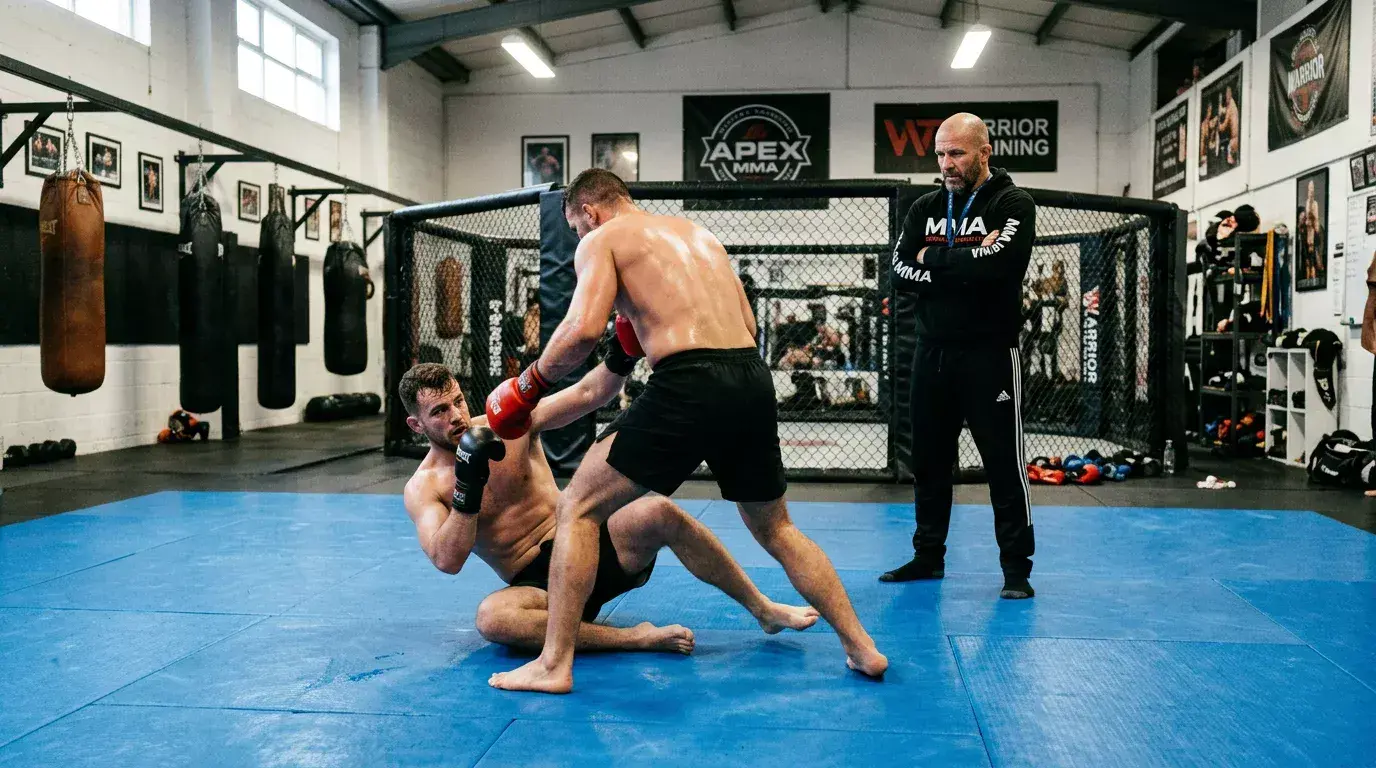
Social media is the noisiest layer but occasionally the most valuable. Fighters post training clips, often without realising how much they reveal. A clip showing a fighter working heavily on wrestling suggests they expect the fight to involve grappling exchanges. A clip focused entirely on pad work with a boxing coach might signal a shift in strategy toward striking. These are not guarantees, but they are directional clues that accumulate over the course of a camp.
The least reliable sources are fan forums, anonymous tips, and unverified injury rumours. I treat all of these as entertainment until corroborated by a named journalist or a direct camp source. Acting on unverified camp gossip is a fast route to losing money on phantom information that may have been planted deliberately to move lines.
Camp Signals That Should Adjust Your MMA Bets
Not all camp information carries equal weight. Some signals reliably correlate with fight outcomes, while others are noise dressed up as insight. After a decade of tracking camp data alongside betting results, I have identified the signals that consistently move the needle.
Gym changes within twelve weeks of a fight are the strongest negative signal. A fighter who leaves their long-term camp and trains at a new facility is adapting to new coaches, new training partners, new routines, and new game-planning methods — all while preparing for the most important night of their competitive cycle. The disruption almost always outweighs whatever motivated the change in the first place. I reduce my probability estimate for these fighters by five to ten percentage points depending on the circumstances.
Injury reports from named sources are the second most impactful signal. If a credible journalist reports that a fighter pulled out of several sparring sessions with a knee issue, that information has a direct path to fight-night performance. The injury may not be severe enough to cause a withdrawal, but it can limit the fighter’s movement, cardio, or willingness to engage in certain positions. TKO Group’s president Mark Shapiro noted that the UFC hosts nearly 500 fights annually with an independent integrity service monitoring wagering activity on every event — but no monitoring system can account for the performance impact of a nagging camp injury that never makes the official injury report.
A new coaching addition is a milder signal but still worth noting. When a fighter brings in a specialist — a wrestling coach, a striking consultant, a sports psychologist — it often indicates a specific weakness they are trying to address for a particular opponent. That weakness may already be reflected in the odds if the matchup is obvious (a striker hiring a wrestling coach before fighting an elite grappler), but sometimes the addition reveals a concern that the market has not identified.
Conversely, be wary of overwhelmingly positive camp reports. Fighters and their teams have every incentive to project confidence and readiness, regardless of reality. When every interview and training clip paints a picture of the best camp ever, treat the information with the same scepticism you would apply to a company’s own earnings forecast. The truth is usually less dramatic than the narrative.
Weighting Camp Intelligence Against Hard Fight Data
The most dangerous thing you can do with camp intelligence is overweight it. Camp reports are soft data — they reflect a snapshot of a multi-week process, filtered through human perception and often distorted by agenda. Hard fight data — finish rates, striking accuracy, takedown defence percentages, historical performance against similar styles — is quantitative, verifiable, and far more predictive over large samples.
My rule of thumb is that camp intelligence should modify an existing analysis, never form the basis of one. I start with the statistical matchup, build my probability estimate from the numbers, and then adjust by two to five percentage points in either direction based on camp signals. A fighter whose numbers give them a 55% chance of winning might drop to 50% if credible sources report a significant camp issue, or rise to 58% if the camp signals are unusually strong and specific.
The cases of Darrick Minner and Jeff Molina — both handed multi-year bans in 2025 for involvement in betting schemes, with Molina receiving a thirty-six-month suspension for using insider information about a teammate’s injury — illustrate the extreme end of what camp intelligence can become when it crosses from public observation into insider exploitation. UFC fighters earn roughly 16-20% of organisational revenue, compared to around 50% in the NBA, NFL, and NHL — a pay gap that, combined with access to inside camp information, creates a structural temptation that the sport’s integrity systems are still learning to manage. For bettors operating legally, the line is clear: use publicly available information, weight it appropriately, and integrate it into a framework built on harder data. Camp intelligence is the seasoning, not the meal.
When I sit down to handicap a fight card, the statistical analysis takes about forty-five minutes per fight. The camp intelligence review adds ten minutes — checking social media, scanning the relevant MMA journalists, and noting any gym changes or coaching additions. That time ratio reflects the relative importance of each data type in my fighter analysis model. The numbers drive the bus. The camp reports adjust the route.
Signal, Noise, and the Space Between
Camp intelligence sits in the uncomfortable grey zone between quantifiable and anecdotal. It cannot be backtested, it resists standardisation, and it rewards the kind of soft-skill pattern recognition that no spreadsheet can replicate. That is precisely why it retains value — the difficulty of systematising camp data means most bettors either ignore it entirely or overreact to it. If you can occupy the middle ground — treating camp reports as one input among many, weighted modestly and applied consistently — you gain an informational advantage that compounds quietly over hundreds of bets.